Can't find what your looking for...Search Here :)

Friday, September 25, 2015

Working TOGETHER in Math!

Students think that they are going to walk into "Math World" and enter by themselves and work on problems all alone and they will be able to know how to do each problem. My teacher is trying to break that idea of working alone in Math class. How she does breaks that idea is by forming "homework Groups".

HOMEWORK GROUPS
The students arrive to the classroom with just an answer key on the board with no work show for the problem. They check their homework and compare the answers to the answer key. When the bell rings for the class to start, Mrs. Ondrusek will allow the students to talk about their homework within a designated "homework group". This allows the students to ask their peers how to do a problem that they did not understand themselves. After about five minutes, Mrs. Ondrusek will allow a full class discussion about questions that no one in the group was able to answer correctly. After the class discussion, Mrs. Ondrusek will hand out a haft sheet of colored paper in which there are two simple questions the "homework group" has to answer:
1. We feel confident with...
2. We are still confused about...
This piece of paper will be turned in along with the homework. Mrs. Ondrusek and I read each of the groups haft papers and write little notes that will help them understand a little better. This allow us to look at what we need to go over again if the whole class does not understand something.

I think this is a great tool to be used in the classroom. We have not had an form of assessment yet to compare to the other way Mrs. Ondrusek has done in the past. We shall see in a couple weeks if she will continue this process of correcting homework.

Sunday, September 13, 2015

My CT's classroom

The above image is a simple diagram of my teacher's classroom set up. Her largest class size is 34 students, but in her classroom she has 36 desk because she knows the finalized students schedules will not happen until the end of the week. She has the extra desks thinking she might get a couple of new students in the classroom. She would really want to put the students into their "homework groups" because then it would be easier for the students to work together not only on homework, but on the problems the book called "do it yourself" (she calls "work with a partner"). When she gets her classes finalized, she will group the student's desk (if she has room). She is also concerned that not all students will be able to see the front of the classroom. She does not want the students back to her, so that will create a challenge with how many students she has in her classes. She also has some restriction in the classroom, a LARGE air-conditioning unit and her teacher workstation with an Elmo and computer for the smart board. she does not want the students behind these objects in a way they will not be able to see what is going on in the front of the classroom.

Friday, June 5, 2015

Has technology really changed?


Society is telling the people that technology will influence our children's behavior and will miss social ques from peers because of how much cellphones and computers have taken their eyes from to world around them to a screen right in front of them. I say to you, now look at the two pictures to the left. One was taken on a train years ago and the other taken also on a train in the present day. In both pictures technology is taken the eye sight  of the people in the picture. In the old black and white picture it is the news paper, while in the present picture it is cellphones. So what is this difference between technology years ago compare to technology today? My spouse, Josh, once said "cellphones are a newer way to mind your own business". I truly believe that technology has not change the way our society functions, but technology has become more prevent in society. 


Wednesday, June 3, 2015

Black Jack in Math class...NO WAY!


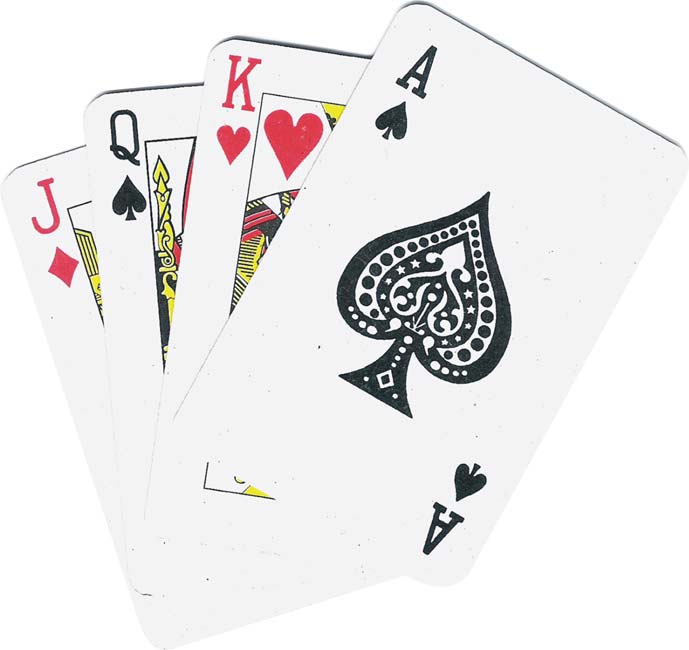
When students hear "probability" or "statistics" in a math class, most student will protest and say they cant do that type of math. My approach to a probability lesson is not let them know what they are learning, but to have them learn and play a card game, Black Jack!

If you do not know the full rules of Black Jack, you are able to find them here.

The following is a lesson plan outline that I created. I have taught is in a college level classroom, but not in a high school classroom. I believe the lesson might have to be changed according to your students.

Review: factions/decimal/percent relation 
-Write on board different fractions
- have students draw a picture, write the percentage, and write the decimal form of each fraction
- allow students to mark what answers they think are wrong and what answers they think are correct
Hand out the following table and allow the students to find answers in groups (you might have to reword some the chance column to meet the need of your students):

In the table below, assume that you are the only player and only a single deck of cards is being used such that we do not reshuffle the cards into the deck.
Chance of:
number:
a red queen in either first two cards

two aces in either first two cards

a 21 in the first two cards

a 21 after the first card that is drawn is an 8

two “face” cards

two cards valued 2-9

two 10’s

Let the fun begin: Black Jack
- break the classroom up into smaller groups
- play a couple of "open hands" (all cards facing up) 
- have each student figure out the probability of busting if even another card base on the cards played at the table 
I created the following table for my students to use to keep track of their numbers: 

Total [of your two cards]
Probability of busting  
What Happened


The college students really enjoyed this lesson. I hope I am able to use it in the classroom or even a smaller version with maybe only five cards for younger students. 

Tuesday, April 7, 2015

Co-teaching...What is That?!?!


The general definition of co-teaching involves two equally-qualified individuals who may or may not have the same area of expertise jointly delivering instruction to a group of students Co-teaching is something as upcoming teachers need to learn how to do. Co-teaching is a strategy that is in many classroom, weather it is with an special education teacher or another teacher that knows the subject. This strategy is to benefit the students as well as the head teacher.

There are five co-teaching approaches according to Jane M. Sileo are
1. One Teach, One Support
2. Team Teaching
3. Parallel Teaching
4. Station Teaching
5. Alternate Teaching  
Each of these approaches can but used throughout a unit in a classroom that host co-teachers. Picking the best approach for your classroom is the key in your students learning. We will break down each one and what each one entails.

One Teach, One Support
This approach entail that the "lead" teacher is teaching the whole class all at once. The other teacher will support the "lead" teacher by gathering observational data for the teacher or circulating the classroom providing assistance to  the students that need help.
Layout example for One Teach/One Support
Team Teaching
In this approach the teachers are teaching the material at the same time in the front of the classroom together. Another name for this approach is "tag team" or "one brain in two bodies". This could be in the form of a debate, modeling information, or role playing. The teachers have to prepare for the class together and make sure they know where the other teacher is and where they want the lesson to end.
Layout example for Team Teaching
Parallel Teaching
The class will be split into two groups and each teacher will teach the smaller group the same material. The students could be seeing the same material but in different ways, depending on the needs of each student.
Layout example for Parallel Teaching
Station Teaching
students are divided into three or four different smaller groups in which they rotate to different station in the classroom. At each station, there is different material or a different way to view the same material or concepts. The two teachers will be walking around the classroom helping students individually or as a group.
Layout example for Station Teaching
Alternative teaching
One teacher is teaching a larger group of the students, while the other teacher is telling a small group of students. This small group of students might just need some more re-teaching, pre-teaching, or enrichment. The key to this approach is that the larger group is not learning any new concepts/material, so the smaller group will not fall behind.
Layout example for Alternative Teaching
Each of these approaches have pros and cons, but you and your co-teacher will have to decide what one will work best with your group of students and your classroom.

In out project in MTH 329, we have to use one of the following approaches to teach our lesson. My group did a combination of team teach and stations teaching. I will let you know how the lesson goes with the co-teaching. 

UPDATE:
My group started off with a simple review activity  in which the students wrote on the board the answers to what a fraction looks like in decimal, picture, and percentage form. As the students finished, they looked each others work and wrote a check mark on the board next to the ones they believe were wrong. My co-teachers and I team taught the next section with asking each student to explain their check mark and why they think it is wrong. We then transitioned into the students get into groups and filling out a table that had the chances of different outcomes of a card game. Here, my co-teachers and I walked around the class looking over each students shoulder and stopping to help each student if they needed help. We then came back other and wrote down the answer and discussed the material and how each student came up with that answer (team teaching). The final activity we used station teaching. In each group, we knew what main point we had to hit with each group and how we would hit the points. With the station teaching we were able to develop more one-on-one interactions with the students and see if the students full understood the concept we were getting at with the lesson. 


 Sileo, Jane M. "Co-teaching: Getting to Know Your Partner." TEACHING Exceptional Children 43 (2011): 32-38. Web.

Wednesday, March 25, 2015

Math Fun Facts!


Exploding Head           As the students walk into a math classroom, the students have one thing on their mind, " math is so boring! Why do we have to learn it?" In Professor Su's  lecture, "My Favorite Math Facts", he talks about how starting off a class period with one math fun fact can change a students perspective about math. These math facts show the students that there is more to math than just numbers on a paper and calculus equations that need to be memorized.  I enjoyed the lecture that was given by Professor Su to the Grand Valley student in which he shared his favorite math facts that he has shown his students throughout his years of teaching. It was very interesting to see some of the facts that he presented, I have already seen throughout my years of being a math student. I wrote a proof about the nine point circle and how the points correlates to the midpoints, the feet of the altitude, and the orthocenter.  Professor Su also presented the different ways that the Pythagorean Theorem can be proven. In one of my classes I had to write a formal proof solving the Pythagorean Theorem in the way that made the best sense to me. Also with the Pythagorean Theorem, we discussed in my class how it is represented in neutral and spherical geometry. The last fun fact that I knew was the friendship theorem. I discussed this in two of my classes on different occasions and how it can be proven by using simple math.

            Professor Su also presented fun facts that I did not know to the student body that were very interesting. My favorite one that he showed was the "magic trick" of the black and red pair of cards. He uses this trick to show people his magical side but in reality it is just some simple math and arrangement of the deck of cards.
The Red and Black Card Trick Revealed
material
1) 52 deck of cards
2) one mathematician  
step-up: arrange the deck of cards every other color (black,red,.....black,red,black,red)
let the trick beginning
1) hand the deck of cards to a student already split in haft (important note: make sure when you split the deck the colors on the bottom are two different colors)
2) have the student shuffle the cards only one time by the bridge shuffle and give the deck of cards back to you
3) put the deck of cards behind your back and "pretend" to fish around for two different cards
4) Pick the first two cards off the top of the deck! If the trick was done correctly the two cards will always be a pair of black and red cards!
LET THE STUDENTS BE AMAZED!  
These simple math fun facts can help  students become interested in the world of numbers. One fun fact can show the students there is a reason in learning math and it is not so boring after all!

For more interesting math fun facts, click here

Monday, March 9, 2015

Will You Be Out Smarted By a Star??

I had three students  try to solve the following question:

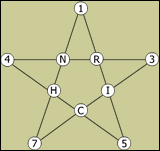
In the star shown here the sum of the four numbers in any "line" is the same for each of the five "lines". The five missing numbers are 9,10,11,12,13. Which number is represented by R?
Star

Student #1
I had the student read the question and tell me what he/she thinks the question is asking for them to do. The student answered, "each line has to add up to the same number".  The first line that the student looked at was  4-N-R-3 because it was easy for him/her to read from left to right. The student tried all combination of the number 9 with all the other combinations.  Then the student looked at line 1-N-H-7. He/she knew that N was a common number between the two lines so they had to be the same. The student had that number as 9 and then did all the combinations. The student realized that those combinations did not work so they worked with different combinations of all the numbers The student figured out two combinations of the two lines  that equal 30. The student then told me that he/she was going to find the letters that were in common in each line and have the line equal to 30. When the student added up the letters, he/she wrote them vertical each time and kept rewriting the numbers he/she already knew-1,3,4,5,7. The students told me that is was their way of thinking and adding the numbers up this way was easier for him/her to understand.
Student #2
I had the student read the question and tell me what he/she thought the question was asking for them to solve. The student though the question asked to "find the numbers that represent the letters".  This students looked at the point of the star and wrote the difference between the points of the star. He/she thought the difference might help find the missing numbers in the middle of the star. then the student added the points of the star together and found those numbers thinking that might help with finding the missing numbers.  The student realized that did not help him/her with the problem so he/she moved on to multiplying the point number by itself. The student found that 3 times 3 equals nine which is one of the number that could be in the middle. He/she thought that nine could be letters N and R because it lies on the line with three in it. The student then looked at the letter I and show that it was in the middle of 3 and 5, 3-I-5. Here the students stopped and i asked if they were confused. He/she said "yes", so we reread the question again. This time the student found that he/she was missing the part about the line in the question. So I asked what were the lines of the star. He/she answered 4-H-C-5 and 4-N-R-3. Then the students added the number 4,5and 3 together thinking this might help.  He/she was getting frustrated again, so we reread the question again and drew a new picture of the star. We broke down the star into the different lines and then the student realized that the lines all had to equal the same sum. Here the student was confused about how four different numbers could add up to the same number. I showed him/her a simple example of 1+2+3+4=10 and 5+2+2+1=10. Each sequence is different but they add up to the same number. I then asked the student what would he/she do now that h/she has this new information. The student told me that he/she would find the missing letters in the lines that add up to the same sum.

Student #3
I asked the student to read the question and tell me what the question is asking the student to solve. As the student was reading the question he/she circled 9,10,11,12,13 and the letters because "they go together, the numbers wills will replace the letters". The student then answered my question that the problem is having him/her solve for the missing letter with the numbers given in the lines of the star. The student recognized that there was five lines in the star and each one had four numbers. The student added the two numbers that he/she knew and wrote them under the star. Then he/she put these numbers in order from smallest to largest because he/she was able to see that the numbers were only one away from each other. The student then added one random  number from the list in the problem-9,10,11,12,13- to the numbers from the points being added together. He/she realized that only three of the lines add to the same sum, but then found the mistake that each line has four numbers not just three. The student then looked at what lines intersect each other at what letter. He/she wrote down the added point numbers and then put two plus sign to remind him/herself that there are two numbers/letters that have to be added together. The student wrote the letters that corresponded to the sum of the points to the left. The student then picked two random numbers to put in for I and R and found right away that those numbers would not work because both large number (point of star sum and given number) are paired together. The student then pick random number from the given list and found that these numbers wouldn't work because the intersection line needs an eight to make the lines equal and eight is not one of the numbers that was given. Then he/she picked another two numbers and found four out of the five lines equal each other, but he/she made a mistake after he/she checked the work. He/she used a given number twice. The student was so close, but he/he felt proud that she almost had the answer.